Electricity
25 May 2026
One of the notable achievements of modernity is mass electrification. This means not only the ability to generate electricity, but to universally and reliably supply it at scale, such that it can be taken for granted. Subsequently, one of the hallmarks of a failed state is the loss of such universal and reliable access to electrical power. This failure cuts particularly deep in countries that in living memory had a reliable electrical grid, but now experience widespread outages. Countries that have seen such backsliding of their electrical supply include the Islamic Republic of Iran, the Republic of South Africa, and of course Zimbabwe. Widespread electrification in what was to become Zimbabwe began during the federal period (1953-1963) with two very large-scale projects: the Bulawayo Thermal Power Station and the Kariba Dam Hydroelectric Power Station.
|
|
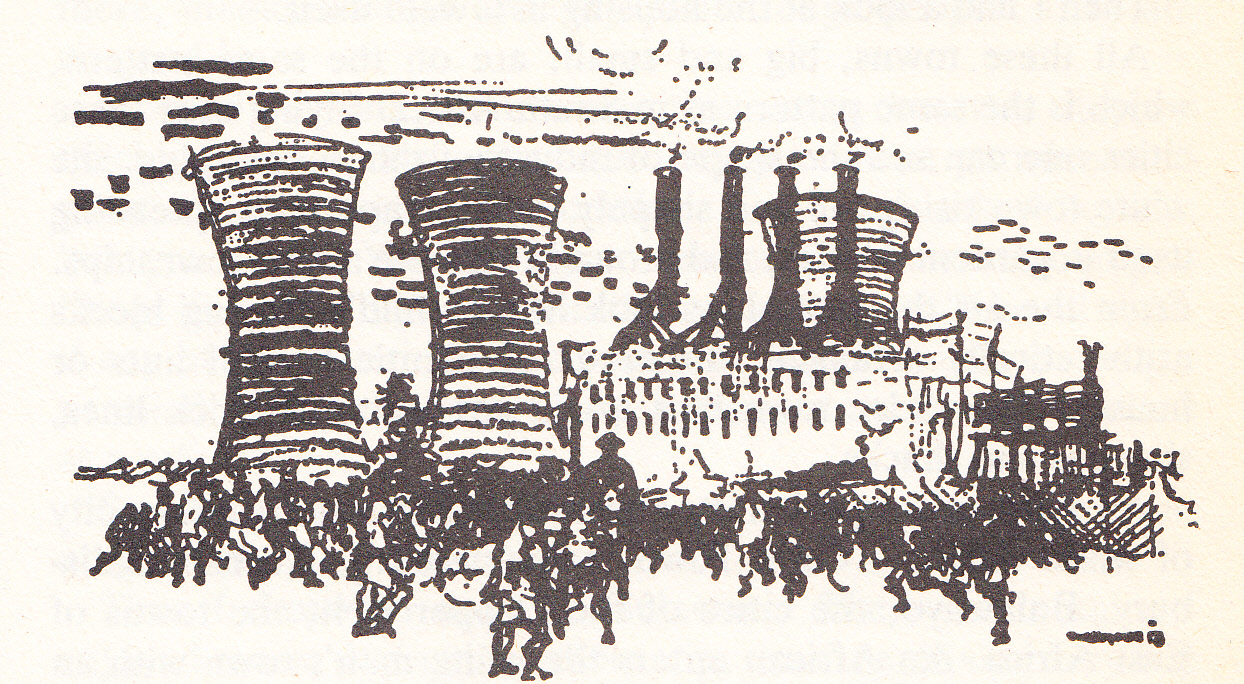
The Bulawayo power station was built in the heart of that city and still dominates its skyline three quarters of a century later. It was built to use coal being mined in the Wankie (now renamed Hwange) region. In its heyday, it had a capacity of 120 megawatts.
By the 1970s, the government of Rhodesia recognized a need for a larger and more modern power station in Matableland to put the vast Wankie coal reserves to use powering the country’s future. Construction on a new coal-powered station slowed due to international sanctions. The project was finally completed in the 1980s as Hwange Thermal Power Station with nameplate capacity of 1,520MW. According to Reuters, by 2010, production was down to “50 MW due to recurrent breakdowns of its ageing plants” (Zimbabwe mulls decommissioning Hwange power plant).
By 2024, Zimbabwe had decommissioned the Bulawayo thermal plant along with two other Rhodesian-era thermal plants in Harare and Munyati.
Kariba Dam Hydroelectric Power Station was the jewel of British colonial development in post-WWII Africa. It is the largest dam in the world and the lake created by it is the world’s largest manmade lake as measured by volume. It took five years to construct. The ribbon on the dam was cut by the British Queen Mother in 1960.
Construction was ongoing when Doris Lessing visited in 1957. While she had nothing but criticism for white settlerism in general and Federation in particular, she was impressed by the scope of the project and the exuberance of those building it:
It all looked like a gold-rush film; another world from the comfortable conformities of little Salisbury; and I liked it very much. This was the atmosphere of the old days, the good old days that people remember so sentimentally; and I cannot help remembering them sentimentally too.
But such carping remarks would not go down well at Kariba itself, which is infected, if any place is, by a pioneering, obstacle-crashing, rip-roaring atmosphere of achievement.
But later, when I recounted this conversation to a businessman from Johannesburg, he said, not without malice: ‘Malvern and Welensky are mad—clean off their heads. They’re spending every penny of the credit of the country on Kariba, and when it’s finished they’re going to have enough power to run a continent on, and no industries to run—or hardly any industries. Kariba’s a project for a heavily industrialized country, and they aren’t going to get the investment in industry because everyone knows the whole show might explode in race-war at any minute.’
As Zimbabwe is a remarkably sunny country, solar power might prove a more reliable source of electricity than it has in North America. Ground has been broken on a number of solar energy projects, but to date none have come online. Should these all open as planned, they would add over 600MW to national capacity. Meanwhile the Zimbabwe Electricity Supply Authority (ZESA) continues to rely on Hwange and Kariba. The two stations have a combined nameplate capacity of about 2,500MW although how much electricity is actually being generated on an average day is hard to discern. The results are the same as in other countries that have neglected their energy needs: rising energy prices followed by the inevitable “load shedding” or as are they’re known in Zimbabwe: “ZESA cuts”. Stories like the following are all too easy to come across:
Zimbabweans are set to endure worsening power cuts after ZESA Holdings announced that Hwange Power Station's Unit 8 has been taken off the grid for 10 days due to a technical fault, further straining the country's already fragile electricity supply.
Zimbabwe Faces Intensified Power Cuts As Zesa Shuts Down Hwange Unit 8 for 10 Days (October 21, 2025)
|
|
|
|